
Don’t Buy Coins at the Wrong Time
A coin we like suddenly takes off. Every new high makes waiting feel harder. We still believe in the project, so buying now feels reasonable.
This audio is generated by an AI tool.
But liking a coin and liking its current price are two different decisions. After a sharp rally, a little patience may give us a cheaper entry.
ARB: the retreat came quickly
ARB surged, then gave back part of the move over the following day. Someone buying near the highlighted high was soon holding a loss, even though the coin remained above its earlier starting price.
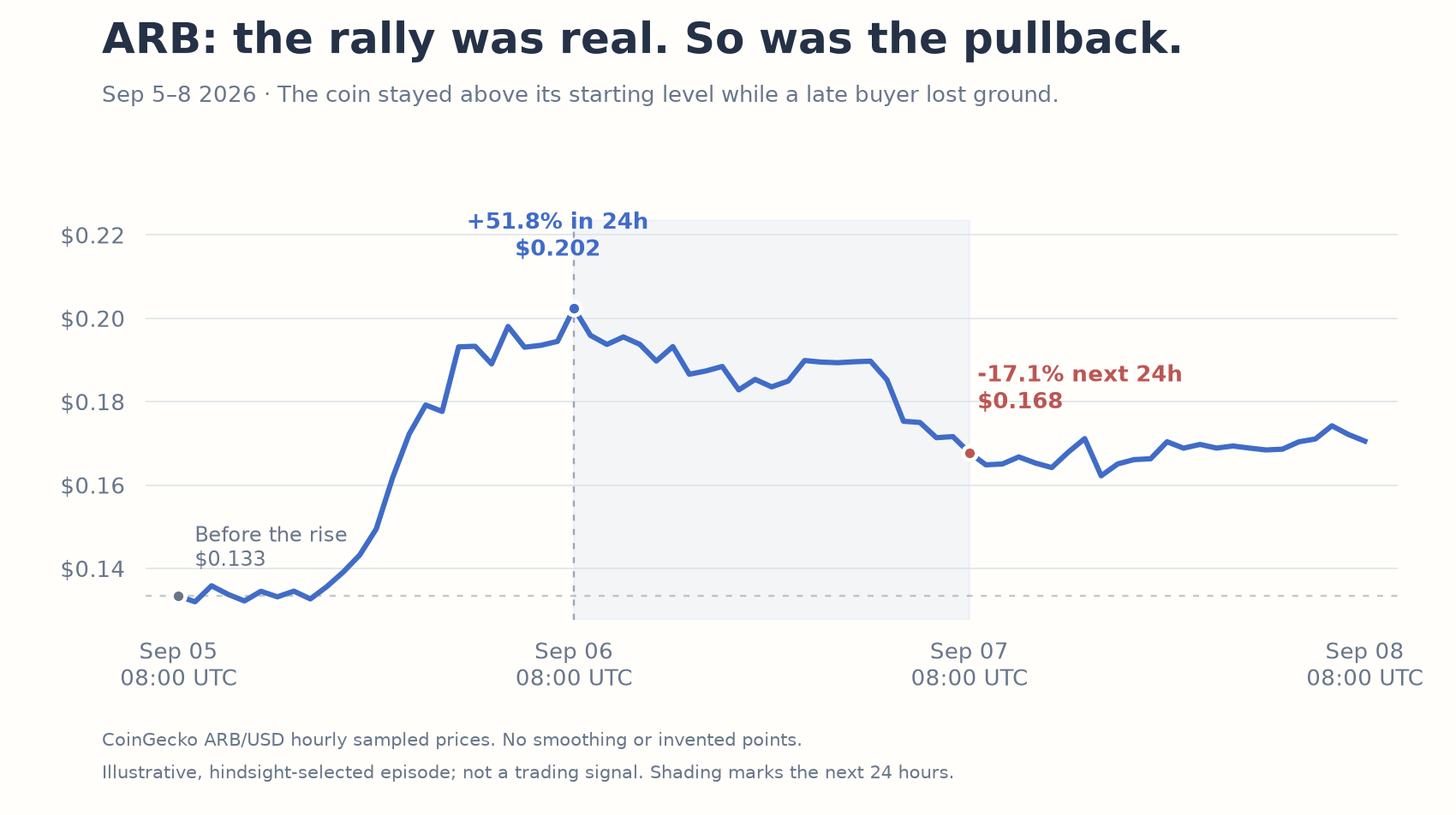
In this example, waiting until the following day meant being able to buy at a lower price than at the highlighted high.
HYPE: the retreat took longer
HYPE held up through the day after its highlighted surge. By the second day, however, it had fallen substantially below that point.
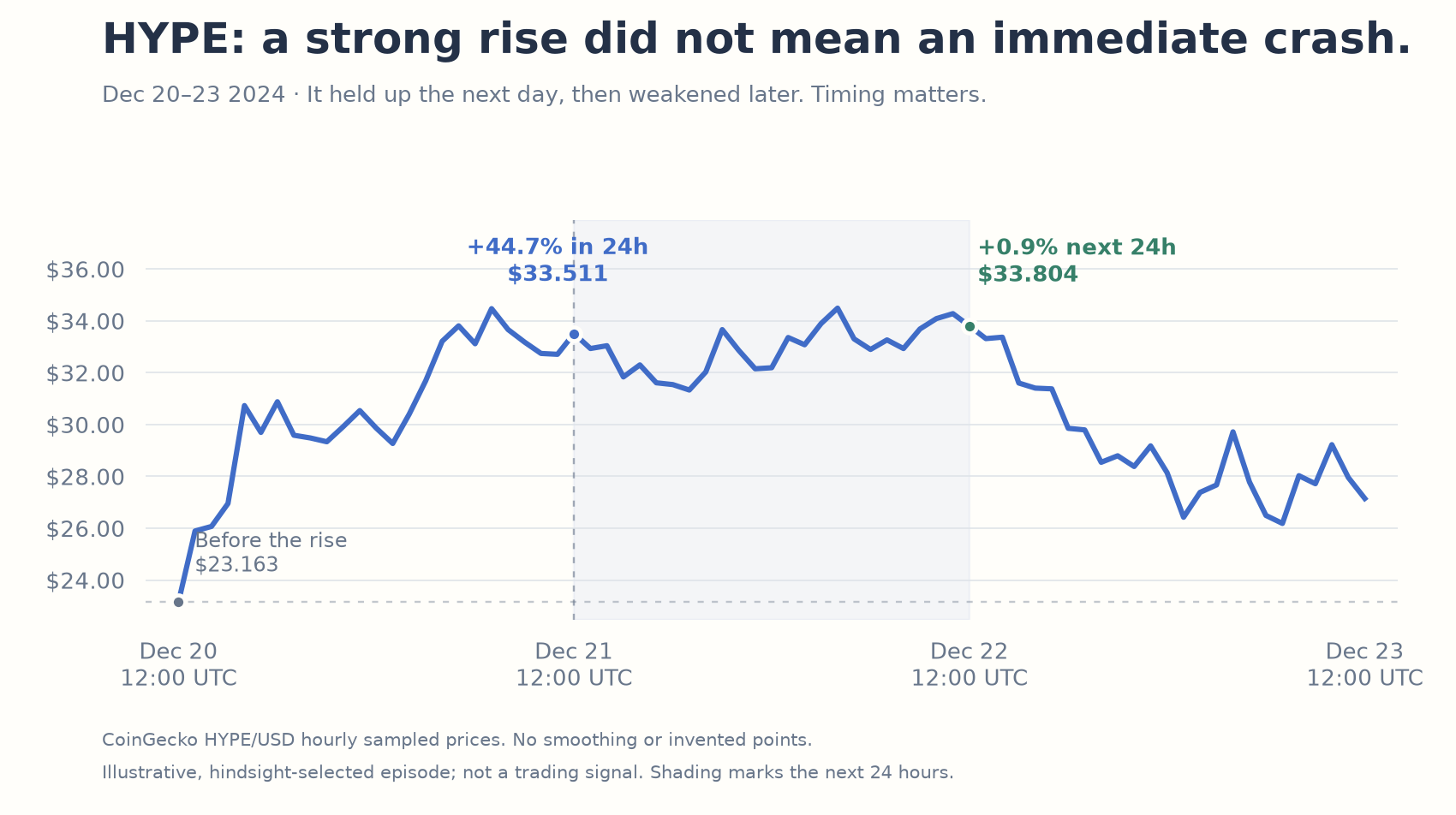
The timing differed, but the entry-price lesson was similar. Waiting through the initial excitement offered a lower price in both examples.
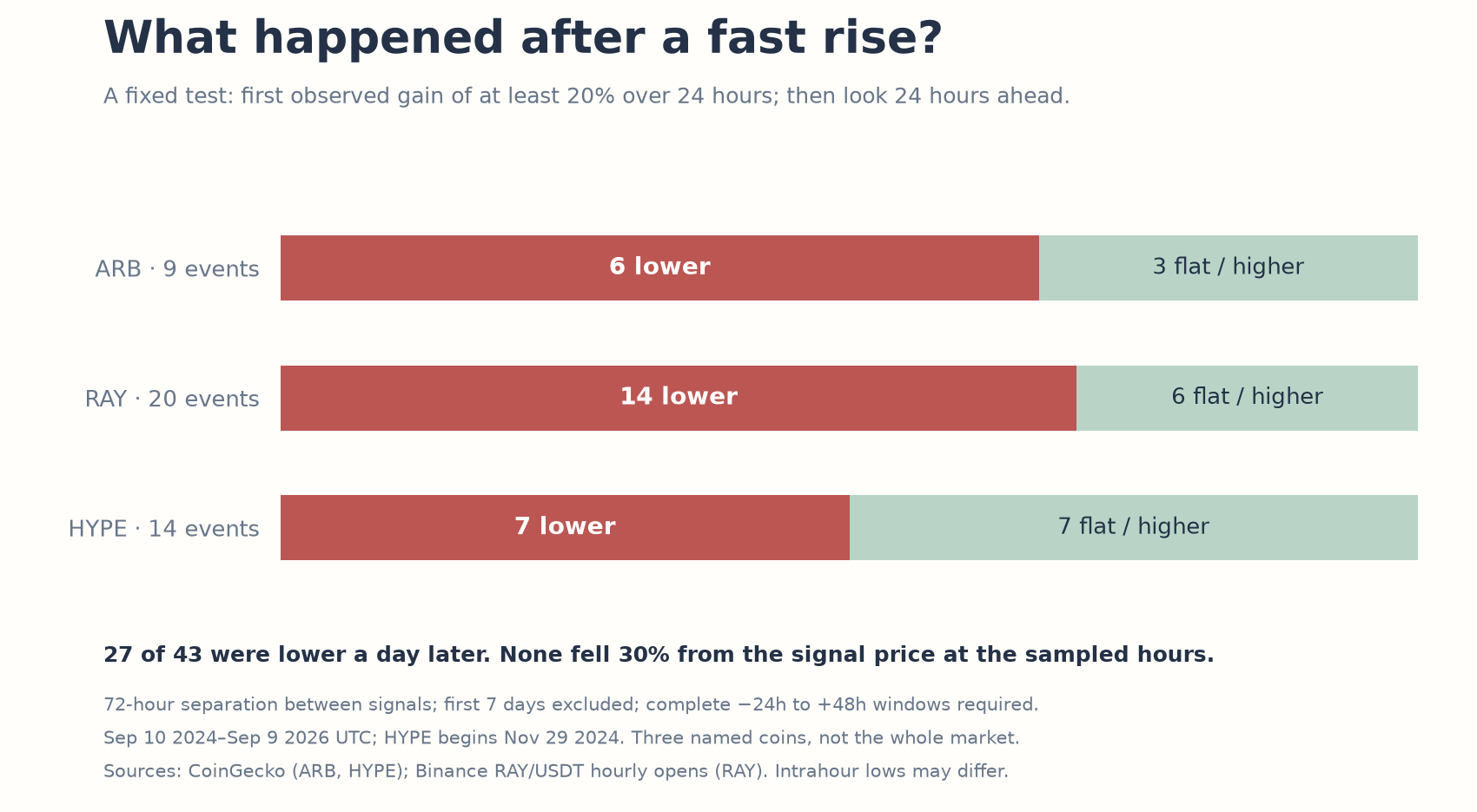
What happened after other fast rises?
We checked ARB, RAY, and HYPE using the same rule. More qualifying signals ended lower the next day than ended flat or higher.
We also checked our website’s first 20 coins
We applied the same test to the first 20 coins in our homepage’s Inflation list, including Bitcoin, using history from 2020 where available.
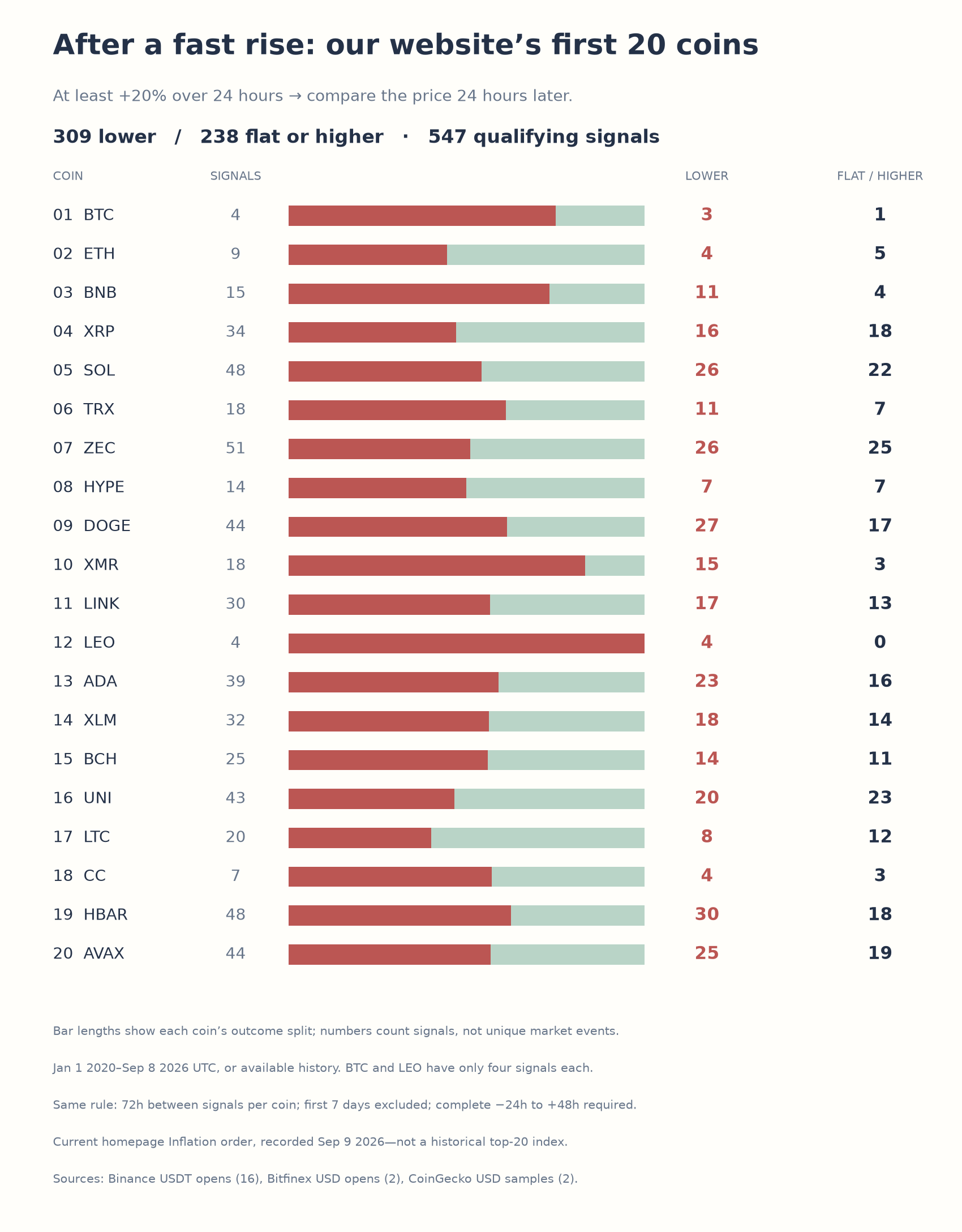
Lower prices were more common overall, but several coins showed the opposite split. Bitcoin and LEO had very few qualifying rallies, so their results need particular care.
That gives us a reason to pause before chasing. It does not establish a guaranteed buying window: some rallies continue, and this study did not test a wait-and-buy strategy.
We could use the next day or two to revisit the coin and its price. If it pulls back and our reason for owning it still holds, we can reconsider buying at a lower entry. A falling price alone does not make it a good purchase.
We can like the coin without rushing to buy it after a sudden jump.
Read next
 MrNasDog Pressure FrameworkWhy $100 in Hyperliquid became $354 while Worldcoin fell to $27, and the three checks we use before we buy.
 Why Did WLD Crash?Millions of people use World, yet WLD is down about 95%. Nobody needs to buy the coin, and new WLD arrives every day.
 Why I Sold Half My LINKA big LINK release is due in October. Last year the same release came right before a big fall. Why I sold half for Bitcoin.
 Your New Member HomeMembers can ask any investment question and book a one-to-one call with MrNasDog, every month.
Was this page useful?